
🐝 Beekeeping Education Center
Walker County Beekeepers Association
Welcome to our comprehensive educational resource center. Whether you’re a beginner just starting your beekeeping journey or an experienced keeper looking to improve your practices, you’ll find valuable information here. Our guides are based on proven beekeeping methods and local experience.
Getting Started with Beekeeping
Your First Hive Inspection
Don’t stress about finding the queen—look for brood and healthy activity instead.
Step 1: Timing Your First Inspection
Wait four to five days after bringing your bees home before doing your first inspection. This gives the bees time to settle in and start their routine.
Step 2: What to Look for During Inspection
- Full frames: If your top box is about 80% full of bees, it’s time to add your next box
- Brood presence: Look for all stages of brood—especially larvae and capped brood
- Pollen and nectar: Frames should show a mix of pollen, nectar, and honey
- Well-fed brood: Larvae should appear moist, shiny, and white
Step 3: Feeding Your Hive
New hives need food. Feed about one gallon of 1:1 sugar syrup per week. Feed consistently to help them grow and draw out comb.
Step 4: Post-Inspection Tips
- Push frames tightly together when done
- Keep inspections short—5 to 10 minutes is plenty for your first visit
- Come back for a follow-up inspection four or five days later
Pro Tip: You don’t have to find the queen. The presence of eggs, larvae, and brood means she’s doing her job!
Hive Management Best Practices
Understanding Your Hive Structure
- Bottom box (brood box): Reserved for the queen and brood development
- Middle box: Can be brood box or honey storage depending on season
- Top boxes (supers): Reserved for honey storage and harvest
When to Add Boxes
Add boxes when the current box is about 80% full of bees. This prevents overcrowding and encourages growth.
Queen Excluders: To Use or Not to Use?
✓ Advantages:
- Prevents queen from laying in honey supers
- Makes harvesting easier
✗ Disadvantages:
- Bees store less honey in supers with excluder
- Slower to begin storing nectar
- Bees won’t draw out new foundation if excluder is in place
Important: Never use an excluder during winter. The winter cluster needs to move upward to access stored honey.
Identifying and Fixing Honey-Bound Hives
A honey-bound hive has so much nectar/syrup that the brood nest is filled, leaving no room for the queen to lay.
Signs of a Honey-Bound Hive:
- All boxes above the first brood box are completely full of honey
- Lower brood box has multiple frames of capped honey and only a few frames of brood
- No open spaces for the queen to lay eggs
- Bees are drawing excess burr comb all over the hive
How to Fix It:
- Remove 2 frames of honey on either side of the brood
- Set frames at least 20 feet away and allow them to be robbed out
- Place the now-empty frames back into the hive on either side of the brood
- Add an empty box
- Stop feeding if you were feeding
Seasonal Beekeeping Guide
Spring (Population Increase Phase)
- Population is growing rapidly
- Queen is laying heavily to build workforce
- Add boxes as needed to prevent swarming
- Monitor for diseases and pests
- Ensure adequate food stores
Summer (Population Peak Phase)
- Hive population reaches peak
- Major honey flow occurring
- Test for Varroa mites and treat as needed
- Maintain 30 pounds of stored honey in second box
- Provide water sources for hive cooling
- Add empty boxes for summer cooling if temperature exceeds 90°F
- Begin feeding immediately after harvest
Fall (Population Decrease Phase)
- Population naturally declines
- Critical for winter preparation—don’t delay!
- Ensure 80-100 pounds of honey stored (varies by region)
- Feed pollen patties 2+ pounds per month (Sept-Nov)
- Final opportunity to requeen if needed
- Test for mites; treat if threshold exceeded
Winter (Dormant Phase)
- Population is at its minimum
- Queen enters dormancy but begins laying in late winter
- Bees cluster together for warmth
- Do NOT open hives; minimize disturbance
- Monitor food stores from outside
- No queen excluders—cluster must move freely
Critical Summer Care (Post-Harvest)
Winter losses are often the result of improper care during summer months. Start your winter preparation immediately after honey harvest!
Summer Feeding Strategy
After harvest, your bees are entering a critical period. There is virtually no nectar flow, yet they’re still rearing brood and need large amounts of food.
Trickle Feeding Method
Feed approximately 1/4 to 1/2 gallon of 1:1 sugar syrup per week rather than large amounts infrequently.
- Goal: Maintain at least 30 pounds of stored honey in the second box
- Duration: Continue until the hive has adequate stores (usually into October)
- Enhancement: Add nutritional supplements like Apis Biologix or Complete to syrup
Pollen Supplementation
During hot, dry summers or nectar dearths, pollen becomes scarce. Provide pollen patties to ensure brood gets proper nutrition.
Nutrition Matters: Just like humans, bees need a balanced diet. Sugar syrup provides carbohydrates, but pollen provides essential proteins, lipids, and vitamins needed for healthy brood development.
Pest and Disease Management
Varroa Mites: Your #1 Priority
Varroa mites are the most significant pest threat to honeybees. They weaken hives by feeding on bee blood and transmitting viruses.
Testing for Varroa Mites
Test regularly! Goal is to maintain a Varroa load of less than 2%.
Alcohol Wash (Most Accurate)
Take 300 bees, submerge in alcohol, shake vigorously, and count mites. Threshold: < 2 mites per 100 bees
Powdered Sugar Shake
Coat 300 bees with powdered sugar, shake into strainer, count mites. Threshold: < 6 mites per 300 bees
Sticky Board
Place sticky board under hive for 24 hours, count fallen mites. Threshold: < 9 mites in 24 hours
Treatment Options
- Apivar: Most effective in high temperatures
- Natural compounds: Various organic treatments available; efficacy rates 95-99%
- Mechanical methods: Queen isolation cages, drone comb removal, cultural practices
Important: Always read product instructions carefully regarding population phase and temperature restrictions.
Visual Signs of Mite Infestation
- Deformed wings (K-wings): Bees with crumpled or misshapen wings
- Bald brood: Uncapped or partially uncapped pupae
- Drone brood inspection: Drones are more susceptible; inspect between boxes
Critical: Visual signs of mites indicate a severe infestation. Damage occurs long before visible signs appear. Don’t wait for symptoms—test regularly and treat proactively.
Recognizing a Drone-Laying Hive
If your hive has lost its queen and failed to raise a replacement, worker bees will begin laying unfertilized eggs, which develop into drones.
Signs of Drone-Laying Hive:
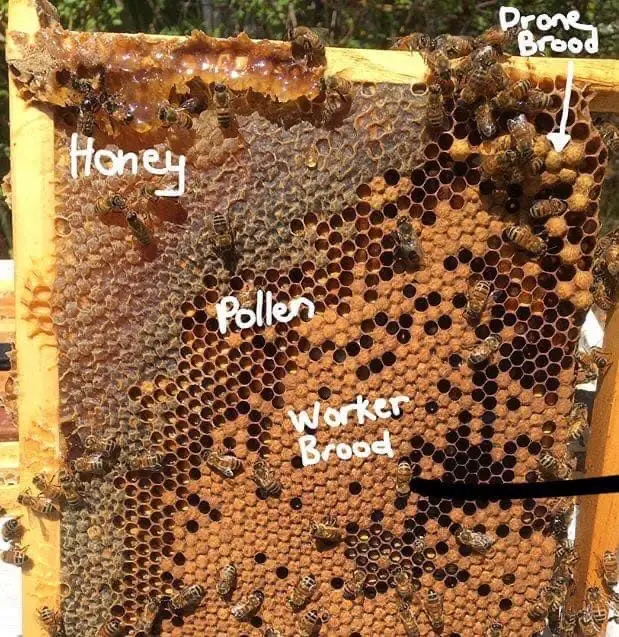
- Abundance of drone cells instead of worker cells
- Multiple eggs per cell (4-12+), often stuck to sides and floor
- Raised, bumpy brood pattern as workers widen cells for larger drones
- No new worker brood appearing
Harvesting and Honey Processing
Is the Honey Flow Over? How to Know
The major nectar-producing flowers begin to die
Talk with local beekeepers to identify key nectar-producing plants in your area. When these flowers die off, harvest time is likely around the corner.
What are your bees doing?
When the nectar flow ends, you’ll notice:
- Bees begin to uncap honey and consume it
- No longer storing large amounts of fresh nectar
- Fewer uncapped cells with nectar in the hive
- Bees may become prone to robbing
The bees have capped and cured the honey
Test honey curing with the shake test:
- Hold a frame horizontally over an open hive
- Shake vigorously
- If nectar rains out, honey is NOT cured—wait another week
- If little or no nectar comes out, honey IS cured and ready to harvest
Getting Bees Out of Supers
Before harvesting, you need to remove bees from honey supers.
Bee Brush Method
Cost: Cheapest
Best for: Few boxes
Note: Tedious and time-consuming
Fume Board Method
Cost: Moderate
Best for: Multiple hives
Time: 30 seconds to 2 minutes per super
Bee Escape Method
Cost: Inexpensive
Best for: Planning ahead
Time: Several hours to days
Leaf Blower Method
Cost: Free if you own one
Best for: Cool weather
Note: Makes bees angry—use with caution
Extracting Honey Without an Extractor
You don’t need an expensive extractor for small amounts of honey!
Cookie Sheet Method
- Uncap both sides of frame with uncapping knife
- Place frame upside down on cookie sheet (bees build cells at 17° angle)
- Cover loosely with plastic wrap
- Let sit overnight—one deep frame yields almost a quart of honey
Crush and Strain
- Remove comb from frame
- Squeeze honey out of comb by hand into a bowl
- Strain through fine mesh to remove wax
- Allow several days for air bubbles to rise before bottling
Storing Honey Frames for Next Year
If you’re not extracting, store empty frames for reuse.
- Freezer: Most effective; prevents wax moth damage
- Certan: One-application, non-toxic wax moth protection
- Para-Moth: Traditional crystals; requires periodic replenishment and airing out
Educational Resources & Tips
Understanding Your Bees
Your bees are telling you something every time you open the hive. Learn to listen:
- Nutritional status: Look at brood color and moisture level. Dry larvae indicate insufficient nutrition.
- Queen health: Eggs are tiny (grain of rice size) but larvae and brood patterns indicate queen presence
- Hive organization: Honey on outside edges, pollen banded around brood, brood in center is ideal
Summer Splits
Want to expand your apiary? Summer is ideal for splits.
- Split as early as possible in summer for best overwintering success
- Use mated queens rather than queen cells (faster establishment)
- Minimum 4 frames of brood for viable summer split
- Feed heavily—they’re in a race against winter
- After July 4th, success rate drops to about 50%
Mean Bees?
If your bees suddenly turned aggressive:
- Check weather: Bees are grumpy when it’s windy, chilly, or otherwise poor
- Improve smoker technique: A poorly lit smoker is one of the easiest-to-fix causes
- Look for hunger: Trickle feed during dearth periods
- Timing: Work hives in afternoon when gentle foragers are out
- Last resort: Requeen if genetics are mean
Selling Your Honey
If you decide to bottle and market honey:
- Check state licensing requirements (varies by state)
- Follow FDA food labeling laws
- Check local health department guidelines
- Peel-and-stick labels are cost-effective (quantity pricing available)
- Create a brand identity with catchy name and logo
- Price to sell AND to reflect your costs plus profit
- Social media and word-of-mouth are your best marketing tools
Connect With Us
The Walker County Beekeepers Association meets monthly to share knowledge, support each other, and advance the art and science of beekeeping in our region.
For meeting times, locations, and additional resources, contact your local association officers.
Remember: Every beekeeper is always learning. Don’t hesitate to ask questions and share your experiences with fellow beekeepers!
© 2026 Walker County Beekeepers Association
Dedicated to supporting honeybees and beekeepers in our community
This educational material is provided as a general guide. Always consult with experienced local beekeepers and follow your state’s beekeeping regulations.
FAQs
Here are some common questions about beekeeping. Let’s clear things up!
Bees primarily eat nectar and pollen. The nectar is converted into honey, which provides energy, while the pollen supplies proteins and nutrients. They love flowers, so having a variety of plants is great for them. ¡Las abejas son criaturas increíbles!
Starting beekeeping is easier than you think! Begin by taking a class, joining a local beekeeping group, or reading up on the topic. You’ll need some basic equipment, like a hive, and a passion for these buzzing buddies! ¡No te preocupes, estamos aquí para ayudar!
There are three main types of bees in a hive: the queen, workers, and drones. The queen lays eggs, worker bees do all the jobs, and drones are there to mate. Each has a unique role, making the hive a well-organized community.
Bees are crucial for pollinating many plants, including fruits and vegetables. They help produce about one-third of our food. Protecting them means supporting our ecosystem and agriculture. ¡Sin abejas, no hay comida!
Regular checks are key! Monitor for pests, diseases, and food supply. Keep the hive clean and ensure the bees have enough room to grow. Also, stay updated on best practices. ¡Tus abejas te lo agradecerán!